
Your fitness journey requires an upgrade through Sumo squat exercises. Sumo squat exercises serve as an excellent way to develop strength alongside lower body toning and complete fitness improvement. This guide provides all necessary information to perform sumo squats for beginners and experienced practitioners. Let’s dive in!
What Are Sumo Squat Exercises?
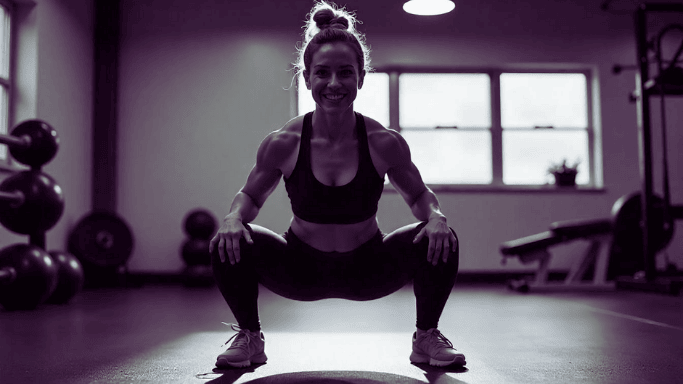
Sumo squat exercises function as an alternative form of the classic squat exercise. You adopt a wider stance for the exercise that resembles the position of a sumo wrestler.
The 45-degree angle of your toes points outward as you perform the movement by bending your knees. A single movement of Sumo squats activates all your lower body muscles including your inner thighs together with glutes and hamstrings and quads.
Sumo squats deliver multiple advantages that make them an effective exercise choice.
Sumo squats work well because they activate numerous muscles throughout each rep. These exercises enhance both your stability while improving your flexibility together with your posture. This exercise holds dual advantages because you need no specific location or tools to perform it.
Further Reading:
10 Leg Adductor Exercises for Strength and Stability
Benefits of Sumo Squat Exercises
The exercise known as Sumo squat delivers numerous advantages to enhance your physical health and well-being. Multiple reasons support the addition of Sumo squats to your exercise routine.
1. Stronger Legs and Glutes
The exercise activates your inner thigh muscles together with your quadriceps and gluteal muscles. Regular practice of sumo squats results in developing stronger lower body muscles and improved strength.
2. Improved Balance and Stability
Sumo squats performed with a wide stance enable better stability and balance control in your body. The wide stance of this exercise provides special support for basic activities including stair climbing and walking.
3. Better Posture
The correct performance of sumo squats demands that your spine remains straight while you maintain an upright chest position. By performing this exercise you develop core muscle strength as well as enhance your posture.
4. No Equipment Needed
Sumo squats require no special equipment to perform them successfully. You need only your body along with a modest amount of room for this exercise.
5. Burns Calories
Sumo squats serve as compound exercises since they activate various muscle groups simultaneously. The exercise combination along with its metabolic effects leads to increased calorie expenditure.
How to Do Sumo Squat Exercises: Step-by-Step Guide
Novice sumo squatters can relax because there is no need to feel anxious. A basic step-by-step guide will help beginners start their sumo squat exercises as follows:
Step 1: Stand in the Right Position
- Begin by taking the correct position with your feet wider than shoulder width
- Set your feet at a distance wider than your shoulders.
- Your feet should face outward at a 45-degree angle during the exercise.
Step 2: Engage Your Core
- Your core muscle contraction will maintain your back in a straight position.
- Keep your back against your shoulders while holding your chest at an upright position.
Step 3: Lower Your Body
- To achieve a sitting-in-chair position lower your body by bending your knees.
- Push your body down only as far as possible without breaking the alignment of your knees to toes.
Step 4: Push Through Your Heels
- Use your heel power to return to standing position.
- During the peak of the exercise, squeeze your glutes.
Step 5: Repeat
- Do 10-15 reps for 2-3 sets.
- Rest for 30 seconds between sets.
Common Mistakes to Avoid
The straightforward nature of sumo squats does not prevent people from making errors during their execution. Several frequent mistakes can occur during the exercise which you should avoid:
1. Knees Caving In
Maintain your knees directly in front of your toes throughout the exercise. Your knees risk injury when your knees bend inward during the exercise.
2. Leaning Too Far Forward
Your body must maintain a straight back while raising your chest upward. Extending your body too deeply in front of you puts excessive strain on your lower back.
3. Not Going Low Enough
Your goal should be to drop your body until your thighs are completely straight next to the floor. Complete exercise benefits will be achieved when you follow the proper movement.
4. Rushing Through the Movement
Spend sufficient time on each repetition while paying attention to your form and controlling your motion.
Tips for Beginners
These following tips will assist beginners who start sumo squats:
1. Start Slow
Learn the correct technique before increasing either your repetition count or lifting weights.
2. Use a Mirror
To verify your technique you should practice your moves in front of a mirror.
3. Warm Up First
A brief warm-up should activate your muscles before starting. Jump jacks or walking for a brief period work well.
4. Use a Chair for Support
To maintain your balance you should use a chair as support during your workout.
Sumo Squat Variations to Try
You should attempt these entertaining variations of the sumo squat after learning how to perform it correctly:
1. Sumo Squat with a Pulse
- Lower into a sumo squat.
- Stand up gradually while making small elevation movements.
2. Sumo Squat Jump
- Lower into a sumo squat.
- Explode upward into a jump.
- Land softly and repeat.
3. Weighted Sumo Squat
- Stand with a chest-level grip of your dumbbell, kettlebell or water bottle.
- Complete a sumo squat movement while maintaining the weight at your chest area.
4. Sumo Squat with Side Leg Lift
- Lower into a sumo squat.
- Stand while you lift one of your legs to the side.
- Alternate legs with each rep.
How to Add Sumo Squats to Your Workout Routine
The sumo squat jump serves as an excellent exercise addition for any workout program. You can add these exercises by following this method:
1. As a Warm-Up
Perform between 10 to 15 sumo squats so your muscles can warm up while your blood circulates.
2. As Part of a Leg Day Routine
Perform sumo squats as part of your leg training exercises. Perform deadlifts together with lunges and calf raises when using this exercise.
3. In a Circuit Training Workout
You should place sumo squats within a workout circuit that includes push-ups planks and burpees.
4. As a Standalone Exercise
Sumo squats with three sets make an ideal brief lower body exercise when you need to keep your workout under 10 minutes.
FAQs About Sumo Squat Exercises
What muscles do sumo squats work?
Sumo squat exercises work your inner thighs, glutes, quads, hamstrings, and core.
Can I do sumo squats every day?
Yes, but it’s best to give your muscles a break. Do them 3-4 times a week for best results.
Do I need weights for sumo squats?
No, you can use just your body weight. Add weights later if you want more challenge.
Can Sumo squat exercises help with weight loss?
Yes, Sumo squat exercises burn calories and build muscle, which can help with weight loss.
Conclusion
The simple sumo squat exercise serves as an effective method to develop your lower body strength. The exercise works for beginners and you can perform it regardless of your location. Practicing sumo squats correctly while being consistent will lead to enhanced strength while improving your balance and total fitness level.
So, what are you waiting for? Take advantage of sumo squats this day to begin your journey toward becoming stronger and healthier.